
Lumbar Pain
By Dr. Mihnea Dumitrescu, MD 3 min read
We can help you with your low back pain.
This article addresses low back pain, or lumbar pain. This is still the most common complaint we hear and unfortunately, one of the most poorly understood.
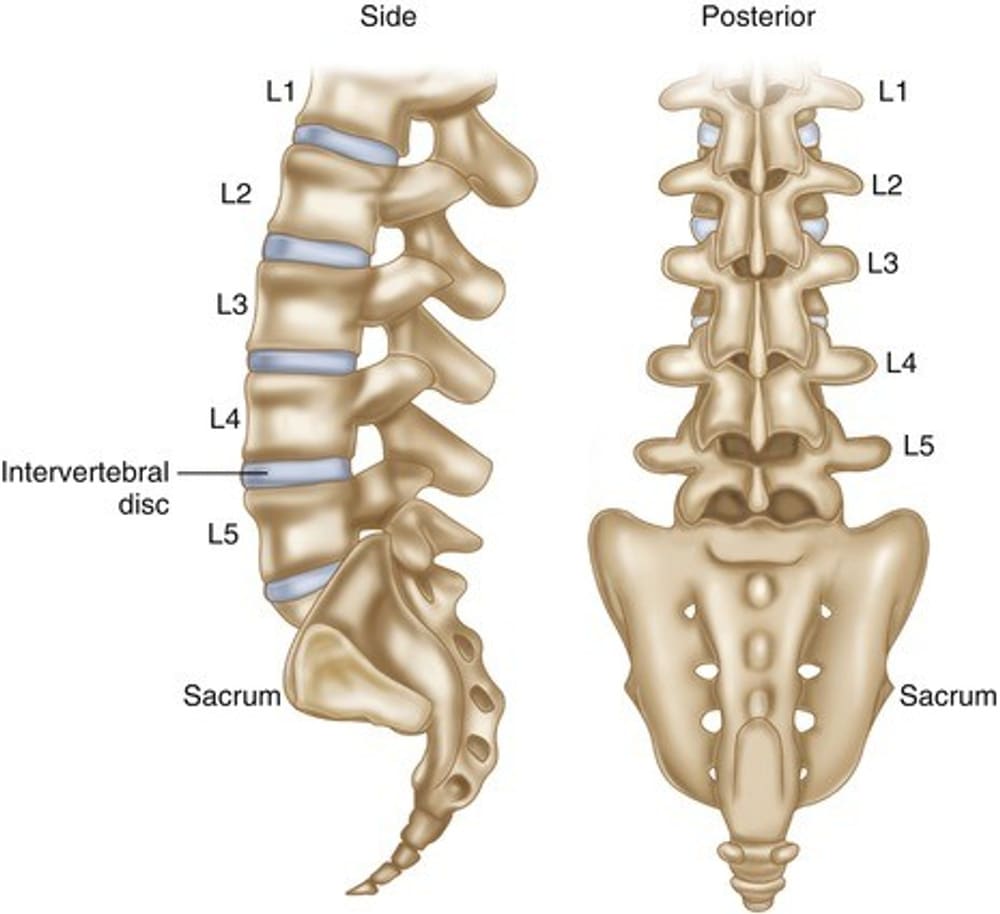
I have written extensively on this subject previously. Much of the content is on our website. Please find them in previous blogs and "what we treat". They are helpful as a primer on anatomy and possible sources for lumbar pain.
The scenario is all too familiar: it generally starts with an acute crisis (“I’ve thrown my back out”). This is sometimes extremely painful, and I have known people who spent a day or two lying on the floor unable or unwilling to move.
What most people don’t realize is that the acute “back attack” episode has been brewing for quite a while.
Our lumbar spine withstands a series of small insults throughout the years. We move the wrong way, put too much weight on the bar, we ignore the small stabilizing lumbar muscles and ligaments, gain weight, sit too much, etc. The main back pain culprit is the lumbar disc. The collagen of the lumbar disc deteriorates and forms little tears. The little tears become progressively larger and fill with new blood vessels and new nerves until the final straw literally breaks the camel’s back and the pain crisis occurs. The vertebrae sandwiching the discs also start to degenerate, become inflamed and painful, a second source of pain. At the same time, the cartilage of the lumbar facet joints in the back of the spine gradually deteriorates. The bones that form these joints start pressing on each other and create a third source of lumbar pain.
After the first pain crisis, back pain comes and goes. You may have one of these back attacks every 2-3 years initially, then they become more frequent, and each one becomes more intense and longer-lasting, until you finally break down and come see us! The good news is that after the pain crises peak, they generally improve, as the spine gradually becomes stiffer. Less mobility generally results in less pain. The bad news is that you have to suffer through numerous painful episodes, usually in the prime of your life, until that happens.
Now the we understand the anatomy and the typical course of back pain, what do we do about it?
First off, our approach to addressing lumbar pain is team-based. Your body weight and the strength of your core muscles need to improve. This is clearly the best long term strategy. In our practice, we work with you to optimize your metabolism and hormones and lose weight if needed. Working with the musculoskeletal and spine chiropractors who share our office, who also use dry needling and laser therapy alongside our regenerative treatments, you learn how to exercise and how to use your lumbar spine properly in order to not only get better, but also to avoid future back attack crises.
Secondly, finding out what your pain sources are is important. Through a careful history, physical examination, review of your MRI scans, other radiology and various spinal diagnostic injections, we determine what causes your symptoms. Are your discs painful? Which one? Are your facet joints painful? Which one? Is the root cause of your deterioration instability of your spine column? Do we have to strengthen the supporting ligaments, muscle and fascia first? We answer all these with a precise, individualized algorithm. No two back pain sufferers are alike, which is why “one size fits all” does not work in medicine in general.
Thirdly, the work of healing the tissue, or slowing down the deterioration, begins. Again, there is good news. We are able to treat most of the causes of low back pain without surgery. In fact, fusion surgery for back pain (that does not radiate into the legs) does not have a high success rate, and most spine surgeons are more than happy to avoid it. Through a combination of ablation techniques (radiofrequency ablation for the lumbar facet joints and ablation of the nerves serving the vertebrae) and regenerative techniques (prolotherapy, platelet-rich plasma, and bone marrow derived regenerative cells) we are able to offer a viable alternative to surgery. When combined with our Functional Medicine approach to metabolism/hormones and the chiropractic care, dry needling and laser therapy our collaborating chiropractors provide, our success rate clearly improves compared to each individual treatment delivered alone.
The key to solving the plague of lumbar pain is to understand it is as much a lifestyle problem as a collection of injured anatomical structures. The traditional interventional and surgical approach has been to find the rogue anatomy and remove it, fuse it, etc. It is obvious that approach has failed. We might not have the final say in this ongoing saga, but we feel we are on a better path.