
What is Sciatica?
What is sciatica?
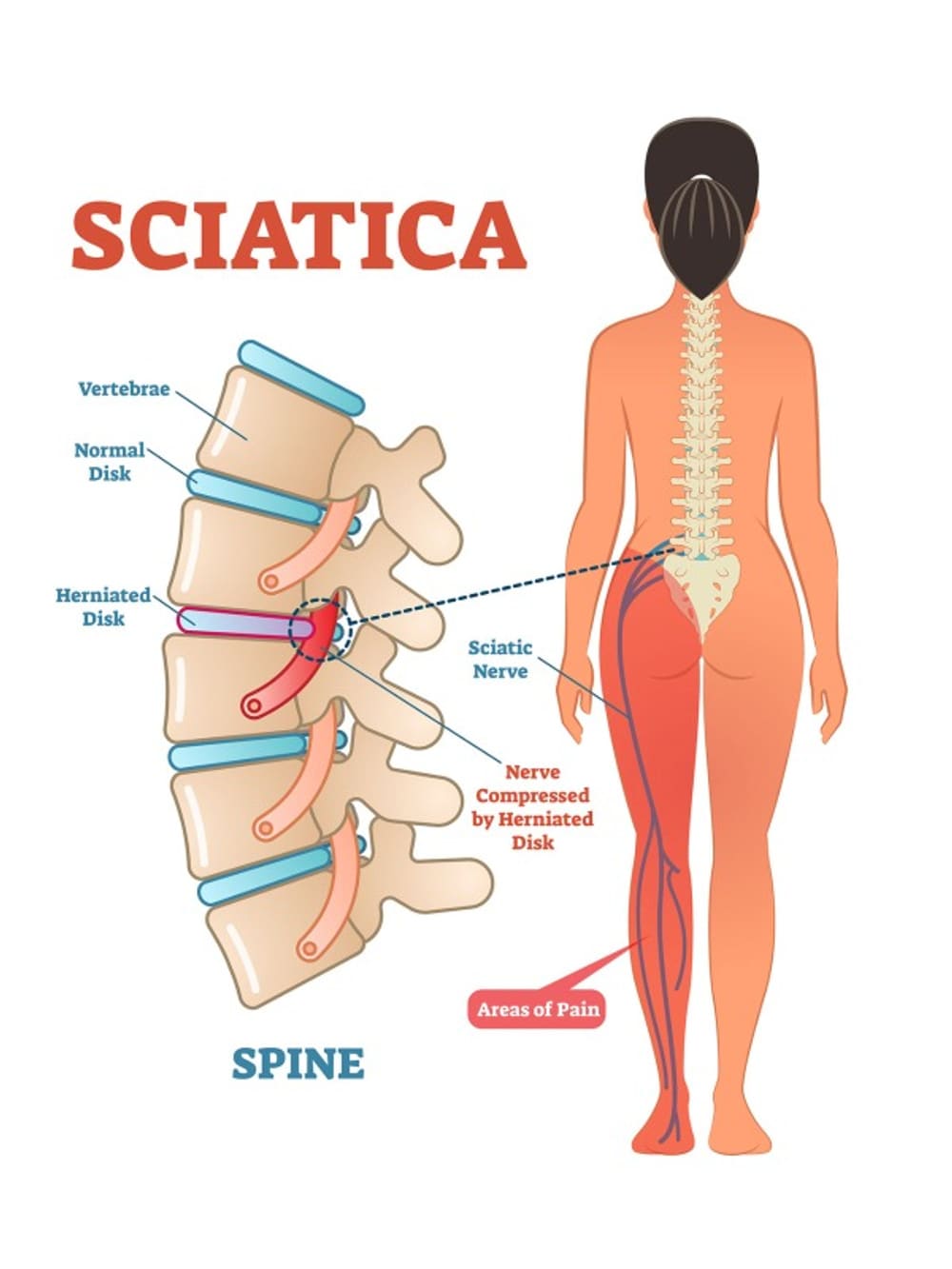
Sciatica is a common term that refers to a constant, burning-type pain that goes down the leg. Anatomically, the sciatic nerve is a combination of the nerve roots that exit from the lumbosacral spine (L4-S3), combine in the pelvis, and then continue down to the buttocks and legs to provide both sensory and motor innervation to the legs. When any part of this pathway is injured or irritated, it can become painful.
What causes sciatica?
The mechanism of sciatic nerve injury is either a result of direct nerve compression, inflammation, an abnormal immune system response of the body, or a combination of all these factors. Research studies have shown that the most common cause of sciatica (up to 90% of cases) is due to a herniated lumbar disc. The herniated disc typically compresses one or more spinal nerve roots (L4-S3) that form the sciatic nerve. A herniated disc can cause pain in two ways: direct compression of the disc material on the nerve root and chemical irritation from the contents of the herniated disc. Some other less common causes of sciatica include degeneration of the vertebral bones called “spondylosis” whereby abnormal growths, such as osteophytes or “bone spurs”, cause compression of the nerve roots as they exit the spine and piriformis syndrome where a muscle in the buttocks spasms around the sciatic nerve.
Are there risk factors for sciatica?
Sciatica affects up to 40% of the population at some point in their lifetime, most commonly in their 40s and 50s. Many risk factors increase the chances of developing sciatica, including smoking, stress, obesity/excess weight, physical inactivity, genetic susceptibility, physical inactivity, and poor work ergonomics.
How do we diagnose sciatica?
When you come in for a patient evaluation at Precision Regenerative and Functional Medicine, we will conduct a thorough history and physical examination that will help us localize the most probable cause of your pain. Advanced imaging techniques such as magnetic resonance imaging (MRI) allow us to see with greater detail the anatomic structures of the spine and possible pain generators. During our comprehensive consultations, we will show you the results and images of your pathology in detail.
How can we treat sciatica?
At Precision Regenerative and Functional Medicine, we have multiple ways in which we can treat this problem, including interventional procedures and functional medicine, together with the chiropractors and physical therapists we work with.
First, disc herniations often respond very well to physical therapy techniques. One such technique is called the McKenzie method. A physical therapist or chiropractor will evaluate your pain and movement patterns and customize a treatment plan that focuses on pain-alleviating maneuvers to increase core strength, strengthen the muscles of the lower back, abdomen, buttocks, and pelvis, improve range of motion, and correct movement patterns.
As discussed earlier, numerous lifestyle factors can impact your spine and cause sciatica. With our nurse practitioner, Jennifer Glasshagel, we can diagnose factors impeding your metabolic health and help you achieve optimal health and weight through hormone and metabolic optimization.
Drs. Dumitrescu and Arel have both undergone advanced fellowship training in procedures that help alleviate your pain. One such procedure is a transforaminal epidural steroid injection, which can be performed in our office. For this procedure, we use a specialized x-ray called a “fluoroscope” to help guide a needle to the location causing your pain, and then deliver medications to the precise area affecting your painful nerve. Another procedure is an endoscopic discectomy where a small tube with a camera is used to remove the disc material irritating the nerve in a simple outpatient procedure.