
Regenerative Medicine
Repair before replacement.
Regenerative and sports medicine in Austin for spine and joint pain — built on precise diagnosis, image guidance, and treatments that ask the tissue to heal rather than simply masking the signal.
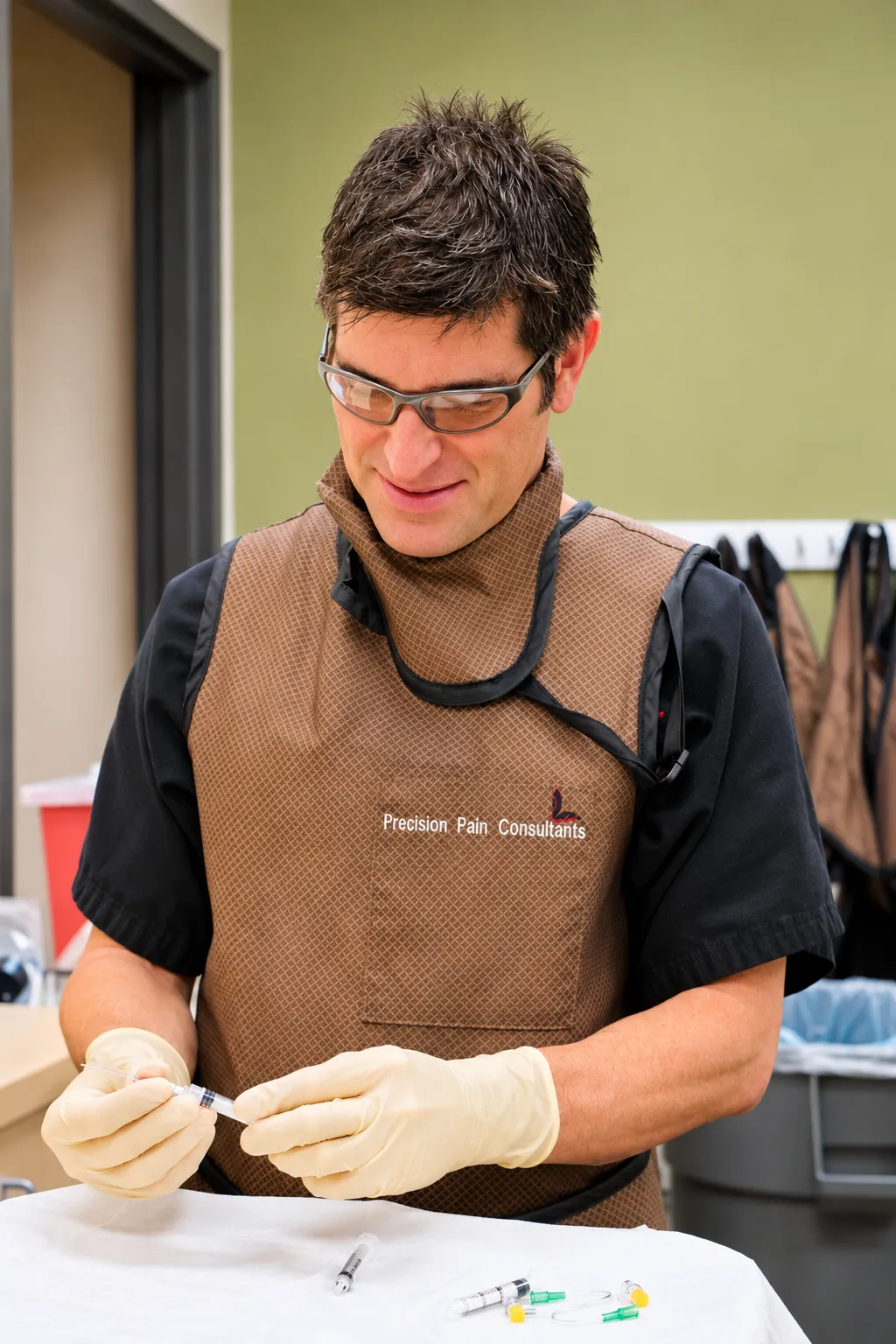
What this is
Regenerative medicine is not one procedure. It is a way of deciding what a painful joint actually needs.
Every plan starts with finding the pain generator — which structure, which level, which nerve. Diagnostic injection, ultrasound and fluoroscopy make that answerable rather than presumed. Once the source is clear, treatment is chosen to match it.
Some patients need one injection. Some need a staged plan across several months. Some are better served by a surgeon, and are told so.
Principal treatments
Cervical, thoracic and lumbosacral spine degeneration and injury, and sports injuries and osteoarthritis of the shoulder, elbow, wrist, hip, knee and foot, treated with the regenerative option that fits.
- 01
Platelet-Rich Plasma
Concentrated from your own blood and placed under image guidance.
Read the article - 02
Prolotherapy
Dextrose and ozone prolotherapy for lax or irritated ligaments, tendons and joints.
- 03
Bone Marrow Concentrate
Regenerative cells drawn from your own bone marrow, concentrated and placed precisely under image guidance.
- 04
Advanced Regenerative Cellular Products
The full range of advanced regenerative products, matched to your diagnosis, age and goals.
- 05
IV Systemic Regenerative Treatments
Regenerative products given by IV, supporting healing throughout the body alongside targeted injections.
- 06
Spine Injections
To diagnose pain sources and provide you with a map for your road to recovery.
Watch first
Dr. D on what regenerative medicine actually is.
Regenerative cell therapy, PRP, back pain, and how the regenerative approach differs from orthopedics — five short videos, collected in Media.
Watch the videosConditions treated
Sixteen reasons people come here.
- 01 Back & Leg Pain Condition guide
- 02 Neck & Arm Pain Condition guide
- 03 Thoracic Pain
- 04 Sacroiliac Joint Pain
- 05 Hip, Piriformis Muscle & Pelvic Pain
- 06 Knee Pain Condition guide
- 07 Shoulder Pain Condition guide
- 08 Elbow Pain
- 09 Wrist & Hand Pain
- 10 Ankle & Foot Pain
- 11 Headache & Migraine Pain
- 12 Complex Regional Pain Syndrome
- 13 Platelet Rich Plasma
- 14 Proliferative Therapy (Prolotherapy)
- 15 Spinal Cord Stimulation Therapy
- 16 Spine Injections
From the journal
Read before your first visit.
- Regenerative treatments What is Regenerative Medicine? At Precision, we practice Regenerative Medicine. This means enabling and catalyzing the body’s ability to heal itself. The ways in which we do this are…
- Regenerative treatments 5 commonly claimed myths about regenerative treatments I wanted to spend a little bit of time talking to you about regenerative treatments. The field of regenerative medicine has seen unprecedented growth, and…
- Regenerative treatments Alpha-2-macroglobulin and a possible alternative to medications or surgery in the treatment of osteoarthritis Wouldn’t it be miraculous if within your own blood stream you were carrying around a biologic treatment for your arthritic knee? Well, it’s true! Your…
- Spine & neck Lumbar spinal stenosis To understand lumbar spinal stenosis, we should start with the symptoms: back, buttock and leg(s) pain, numbness and weakness with standing and walking.…
- Spine & neck Back pain and lumbar disc degeneration or injury The center of the disc, the nucleus, is filled with a jelly-like substance that has very high acidity. The acid in the nucleus is separated from the…
- Spine & neck Why neck and shoulder girdle pain can come from the cervical facet joints and what we can do about it. The cervical facet joints are moving parts situated in the back of the cervical spine. Together with the cervical discs, the facet joints help us support…
Questions
Regenerative medicine, answered.
What is regenerative medicine?
Regenerative medicine's first principle is that the body can heal from within. Sometimes, additional help is needed in extracting and concentrating different biologic agents from different body tissues, and subsequently re-introducing these concentrated biologics back into the body. This can be done through different routes: intravenous (into a vein), or directly into the injured or degenerated structures in the spine or the shoulder, hip, knee and other joints.
What are the main regenerative medicine treatments?
Regenerative medicine started with the use of proliferating agents like dextrose (sugar) more than 100 years ago. Dextrose proliferative therapy (prolotherapy) is still used today. The other most common regenerative treatments are platelet-rich plasma (PRP), bone marrow concentrate and a full range of advanced regenerative cellular products. At Precision, every regenerative option is available, and the choice depends on your diagnosis, age and goals.
What is prolotherapy or prolozone?
Prolotherapy is the injection of a dextrose solution into and around ligaments and tendons to create an inflammatory response that invokes the healing process. Ozone is an unstable form of oxygen gas that binds reactive oxygen species and other harmful molecules and has an anti-inflammatory, antiseptic and pain-relieving effect. The two can be combined for cumulative benefit, or administered on their own.
What is platelet-rich plasma (PRP)?
Platelets are cells in the blood that are rich in growth factors. PRP is a regenerative procedure for spinal and joint problems. We draw the patient's blood (anywhere from 120 cc to 800 cc, depending on age, the extent of treatment and the volume of PRP needed), add an anticoagulant and spin it at a specific speed and time. This separates the red blood cells from the plasma and concentrates the platelets. Once injected into injured or arthritic tissue, the platelets release a burst of growth factors (FGF, PDGF, TGF-β, EGF, VEGF and IGF) that stimulate repair. The plasma supplies nutrients, vitamins, hormones, electrolytes and proteins, including the fibrin that forms a scaffold for new tissue. Read Dr. D's full article on PRP.
What is platelet lysate?
Platelet lysate is a concentrated platelet solution with the cell membranes removed, which makes epidural delivery safer.
What is platelet-rich fibrin (PRF)?
Platelet-rich fibrin is a second-generation PRP formulation in which your own platelets and white blood cells sit in a fibrin matrix that accelerates the healing of soft and hard tissue.
What is bone marrow concentrate?
Bone marrow is harvested from your own body and the regenerative cells are concentrated from it. These cells can develop into cartilage and connective tissue-producing cells that help repair damaged joints and tissues, and they produce many growth and signaling factors.
What conditions can be treated with regenerative medicine?
The physician determines what conditions can safely be treated, and what kind and how much regenerative treatment is clinically best for each patient. As with all other areas of medicine, we do not guarantee or claim that regenerative medicine will cure any disease, and our specific treatment protocols have not been evaluated by the FDA. Our treatments are guided by years of research and clinical experience. Common conditions we treat include osteoarthritis of the spine and joints (shoulder, elbow, wrist, hand, hip, knee, ankle, foot); tendinitis, bursitis and ligament injuries (Achilles, knee, elbow, rotator cuff, ankle); joint pain; low back pain from bulging or herniated discs and sciatica; and plantar fasciitis.
Is regenerative medicine covered by insurance or Medicare?
These procedures are not covered by any insurance plan at this time. Parts of a regenerative plan, such as doctor visits, are billed to insurance, but the regenerative treatments themselves are not. HSA funds can usually be used.
What is the cost of these procedures?
After an initial conversation with the physician, every patient receives a detailed treatment plan, which may include supplements and peptides and 1–3 procedure sessions. The cost varies from $3,000 to $15,000 depending on the extent of treatment. For a ballpark figure for your case, email info@austinppc.com and a patient coordinator will help.
What do your regenerative treatments consist of?
Our regenerative approach to back pain combines supplements, peptides, growth hormone, spinal injections of biologic agents and, where it helps, care from the chiropractors who share our office, who also use dry needling and laser therapy. We believe this approach is more beneficial in the long term than lumbar fusion surgery or endless nerve ablations "just because they're covered by insurance".
How many regenerative cells do I need for my condition?
A common marketing strategy is to promise a particular number of cells, usually in the hundreds of millions, and claim this leads to better outcomes. The truth is that no one knows exactly how many cells it takes to help an arthritic knee, a degenerated disc, a meniscal tear or a rotator cuff injury. In the body, more is not necessarily better: adding too much of a biologic agent can be as harmful as using too little. Not every cell counted is a true regenerative cell, and cell quality may matter as much as quantity. For a typical bone marrow procedure, we use 100–400 million regenerative cells. We count them by flow cytometry and grow them in culture for two weeks to check their quality.
How do I choose a good regenerative medicine doctor?
First, choose a physician, meaning a practitioner with an MD or DO degree. Look for someone fellowship-trained in interventional pain management, meaning skilled at injections in the spine and joints, who performs them with at least ultrasound guidance for the joints and live X-ray (fluoroscopy) for the spine. Meet the physician face to face, and make sure they take a rigorous history and examination, read their own MRIs and show you the abnormalities they will treat. If your diagnosis is not clear, a fellowship-trained physician can do a detailed diagnostic work-up. Avoid practitioners with TV commercials and freeway billboards, and avoid one-trick ponies: choose someone skilled in all types of regenerative treatment. Lastly, look for someone who "zooms out" and talks to you about the lifestyle changes you need to heal and to avoid further problems.
How fast will I see results?
In our experience, results start between 1 and 6 months after finishing treatment. Regeneration is a slow process. Results also depend on your general health and the severity of the injury or degeneration. Be patient, take care of yourself, and results will come.
How long do the results last?
When regenerative treatments work, they usually last for years. If patients do not get years of relief, we believe the cost-benefit ratio is not good. Aging is a one-way process and nothing lasts forever, but we have patients who return every two years or so for a repeat procedure and are happy with it.
Do I need an MRI or X-ray before treatment?
Almost all our patients have an MRI before treatment, unless they have a very clearly diagnosed condition such as plantar fasciitis or tennis or golfer's elbow. Even then, we usually obtain an MRI to see the extent of the injury and decide which regenerative treatment to use.
Is sedation available, and are the procedures painful?
Yes. Our clinic is staffed with a CRNA (nurse anesthetist) and we provide deep sedation in the office, so the procedures themselves are painless. Afterwards there is typically some soreness for 1–5 days, which we treat with prescribed pain medication. You will not be able to take anti-inflammatory medication for the duration of treatment.
Where does back pain come from, and what should be treated?
About 40% of back pain comes from the lumbar discs, 5–25% from the facet joints, 5–10% from the sacroiliac joint, and the rest from spinal ligaments, tendons and muscles. There are two main approaches. One is a detailed diagnostic work-up, where diagnostic injections (medial branch blocks, discograms, selective nerve root blocks) pinpoint each pain source, followed by targeted treatment such as ablation or surgery. The other is a comprehensive regenerative treatment of all the degenerated structures seen on MRI. Some patients prefer the focused approach, others the comprehensive one. More on back pain and sciatica.
Do you see out-of-state or international patients?
Yes. We offer telemedicine appointments, which are billed to insurance, with a $25 fee that brings reimbursement to the level of an in-person visit. We don't have affiliated housing, but we will help you find accommodation close to the clinic. We are centrally located in West Lake Hills, about 10 minutes from downtown Austin and close to the main highways.
Find out what is actually causing it
Bring your imaging and your history. The first visit is about diagnosis, not a sales pitch for a procedure.